

Petzl ASAP LOCK: comparison of the older version vs the new 2026 model
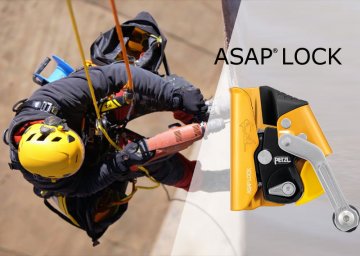
The Evolution of Safety: A Comparison of the Petzl ASAP LOCK (up to 2025) and the New ASAP LOCK (2026)
The Petzl ASAP LOCK mobile fall arrester has been the absolute standard in rope access and height safety for years. Recently, however, the manufacturer released an updated version for 2026. What are the main differences, and is it worth upgrading to the newer model? Let's take a detailed look.
Main Differences Between the Generations
The new 2026 version doesn't just bring cosmetic changes; it offers fundamental improvements in ergonomics, weight, and application possibilities.
| Feature | Older Version (up to 2025) | New 2026 Version |
| Weight | 425 g | 335 g (90 g lighter) |
| Rope orientation | Vertical, angled | Vertical, angled, horizontal |
| Installation on rope | Standard | Safety catches for faster installation |
| Reaction to fall | Upon sudden acceleration | Explicitly at speeds exceeding 2 meters per second |
Key Features and Their Real-World Benefits
Why is the ASAP LOCK product family so popular? Here are the main benefits of its design that you'll appreciate during everyday hard work on the ropes:
- Hands-free movement (Free trailing): The device glides up and down the rope completely independently during normal movement. The rope access technician can focus on the job and doesn't have to constantly manually move the backup device, significantly reducing fatigue.
- Integrated LOCK function: Allows the device to be "locked" on the rope. The benefits? It reduces potential fall distance and, in strong winds (e.g., when working on wind turbines), prevents the wind from blowing the rope upward and creating a dangerous slack.
- Connection arm (Drop-resistant): Thanks to the arm, the device remains attached to the harness (via the energy absorber) even when passing intermediate anchors. The risk of the device falling from height and being destroyed (or injuring someone) is reduced to zero.
- Resistance to the "Panic Grab" effect: The device blocks the fall even if the worker, in shock, reflexively grabs it with their hand during a fall (a common problem with classic descenders).
- Toothed wheel: The specific design of the teeth effectively clears dirt, ensuring the ASAP functions reliably even on frozen or muddy ropes.
Who is the device primarily designed for?
- Rope Access Technicians (IRATA/SPRAT): As a primary back-up device for suspension work.
- Construction and roof workers: As a mobile fall arrester, especially now that the new version officially supports horizontal use.
- Rescuers: In combination with the ASAP’SORBER AXESS energy absorber, the device is tested for two-person rescue situations with a total load of up to 250 kg.
- Wind turbine and tower maintenance: Due to its weather resistance and the LOCK function.
A Fun Fact to Finish
Have you ever wondered why this product is actually called ASAP? The abbreviation usually stands for "As Soon As Possible". Petzl didn't choose this name by accident. When developing the first generation of the ASAP, they were inspired by car seatbelts. Inside, a centrifugal mechanism is hidden. When the unwinding speed exceeds a safe limit (defined as 2 m/s in the new model), the centrifugal force immediately triggers the locking jaws. The device thus stops the fall literally “As Soon As Possible” – instantly and regardless of what the worker's hands are doing at that moment.